

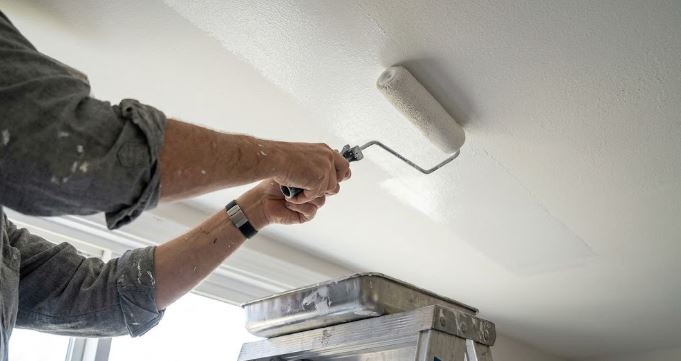
An ordinary room ceiling takes four to six hours, first drop cloth to last tool back in the truck, with two painters working. That covers setup, patching, cutting in, two coats and the wait between them, and it is what we tell a homeowner who asks how long it takes to paint a ceiling in a bedroom or living room.
Three things push a ceiling past six hours: a water stain, heavy texture, and height. What surprises people is that the longest block in the day is not painting, it is waiting for the first coat to dry. On any interior painting job we count that drying window first and build the day around it.
Where the hours go on an ordinary ceiling
A flat ceiling in decent shape is mostly protection and patience. Last March we painted a 12 by 14 bedroom ceiling in one of the West Allis homes. The flat white had gone yellow and blotchy, and two nail pops had opened along a joist. Two of us logged five hours forty minutes, inside the four to six hour range. Where it went:
- Moving and covering furniture, floors and trim: 45 minutes
- Patching the nail pops and sanding them flat: 20 minutes
- Cutting the perimeter by hand: 40 minutes
- Rolling the first coat: 30 minutes
- Waiting for it to dry: 2 hours
- Cutting and rolling the second coat: 55 minutes
- Cleanup and putting the room back: 30 minutes
We keep these numbers on the crew’s time sheet for every job, and the hours in this post come from those sheets
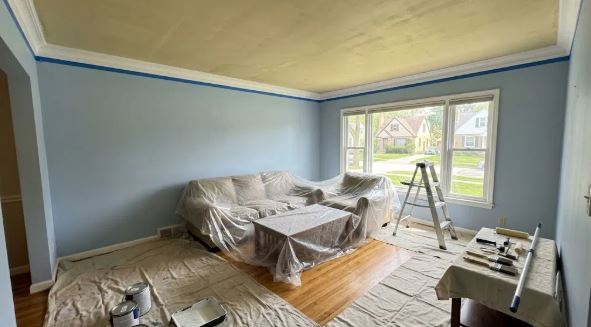
How long to wait between coats on a ceiling
Two hours is our default, and the weather moves it both ways. In a humid Milwaukee July with the windows open we stretch it to three, because paint that feels dry can still drag under a second coat and leave a cloudy patch. In February, with the furnace running and the air bone dry, the same ceiling is ready in ninety minutes, and the risk flips to paint setting too fast to hold a wet edge across a 14 foot span.
How many coats a ceiling needs
Two, almost always. We quote one only over a ceiling painted in the last few years, same color, no stains and no repairs. The first coat tells us. We run a work light across it at a low angle with the room lights off, and if the old color ghosts through at the edges or the sheen varies, it gets another coat.
How long to paint a ceiling with water stains
Eight hours or more for the same size room, well above the range above, and paint is the last thing we touch. The leak has to be repaired and the plaster above it properly dry before we prime anything. The EPA is blunt about this: moisture control is the whole game, and paint rolled over a damp or moldy surface is likely to peel. The peeling part comes from what we see on the job: paint rolled over a ceiling that was still damp tends to lift in sheets within a season
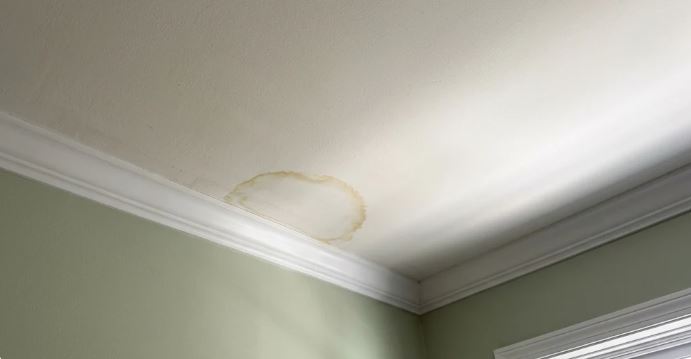
That job was in one of the Greenfield homes we painted last July. A supply line in the bathroom above had been weeping for weeks, and the homeowner’s plumber replaced it before we came back. Once the plaster read dry we spot-primed the ring, let it flash off, then rolled two full coats so the primed patch would not show as a dull spot. The water had run along a joist into the next room, so both ceilings were done that week. The extra time went into priming, the longer wait, and slower cutting.
On the first ceiling, a 12 by 14 room, two of us logged eight hours exactly: 45 minutes covering the room, 10 minutes checking the plaster with a moisture meter, 20 minutes spot-priming the ring, an hour for the primer to flash off, 40 minutes cutting in, 35 minutes on the first coat, three hours of waiting in July humidity, 60 minutes on the second coat and 30 minutes of cleanup. The second room added about five more hours.
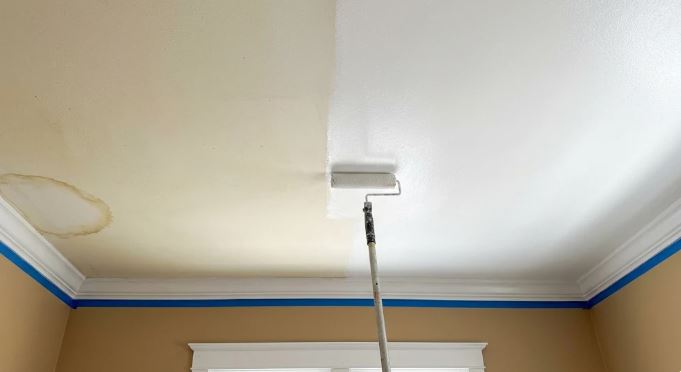
The brown still showing in this photo is the ring’s old stain under its spot coat of stain-blocking primer, waiting to be covered by the finish coats
How long to paint a textured ceiling
Add one to two hours over a flat ceiling the same size. Texture is not harder, it is bigger. Peaks and valleys hold far more surface, so the roller empties faster and the coat goes on thin. We switch to a thicker nap and roll in two directions so paint reaches the shadow side of every ridge.
We painted a knocked-down ceiling in one of the older Wauwatosa homes this September. The texture had gone dull cream and the last coat never covered the high points. Two of us logged just over seven hours, above the range above, with the extra time in the rolling rather than the prep.
Does ceiling height change how long painting takes?
It changes the setup far more than the painting. Eight or nine feet is a pole and a stepladder. Over about eleven feet, or above a stairwell, you need planks and trestles or a rolling tower, and that staging has to be built, moved and broken down again. We budget an extra hour and a half for a vaulted room and more for a stairwell. The Wauwatosa room above was normal height, so the time there was texture, not elevation.
Older homes and lead
Plenty of the houses we work in around Milwaukee and Waukesha County went up before 1978, and their ceilings are often plaster rather than drywall. Plaster cracks along its lath lines and needs its own repair. Sanding or scraping paint in a pre-1978 house can release lead dust, and that belongs to a crew trained in lead-safe work practices. Ask any contractor how they handle it before they start sanding. KND Painting is lead-safe certified.
Should you roll it yourself?
A flat bedroom ceiling in sound condition is a fair weekend job if you are comfortable on a ladder and will spend the first hour covering everything in the room. That hour is where most DIY ceilings go wrong. Call someone for a recent leak, plaster that is cracking rather than just tired, anything over about eleven feet, and any pre-1978 ceiling needing sanding.
FAQ
Should I paint the ceiling before the walls?
Yes, always. Ceiling paint spatters, and anything landing on an unpainted wall disappears under the wall color later. The other way round means cutting against finished walls and living with the drips.
Do I need to prime a ceiling that was painted before?
Usually not. A sound, previously painted ceiling takes paint straight over it. Prime a stain, a bare patch, fresh plaster, or white going over a dark color.
Can I paint a ceiling the same day I patch it?
Small filler repairs, yes, once the compound has dried through and been sanded. Larger patches and fresh plaster need longer. Compound still damp underneath leaves a flat spot.
Why does my ceiling look streaky when it dries?
Almost always a wet edge problem. The roller passed over a section that had started to set, or the second coat went on too soon.
What colour and finish work best on a ceiling?
Flat white. A flat sheen scatters light instead of reflecting it, so it hides the imperfections every ceiling has. Anything shinier picks out every roller mark and seam.
Planning your ceiling
Set aside most of a day for an ordinary room and accept that a chunk of it is waiting. For a stained or textured ceiling, assume longer. If you would rather hand it over, KND Painting works across Milwaukee and Waukesha County and will walk the room with you and put the hours in writing as part of a free estimate.